
In association with Hippocampus Labs
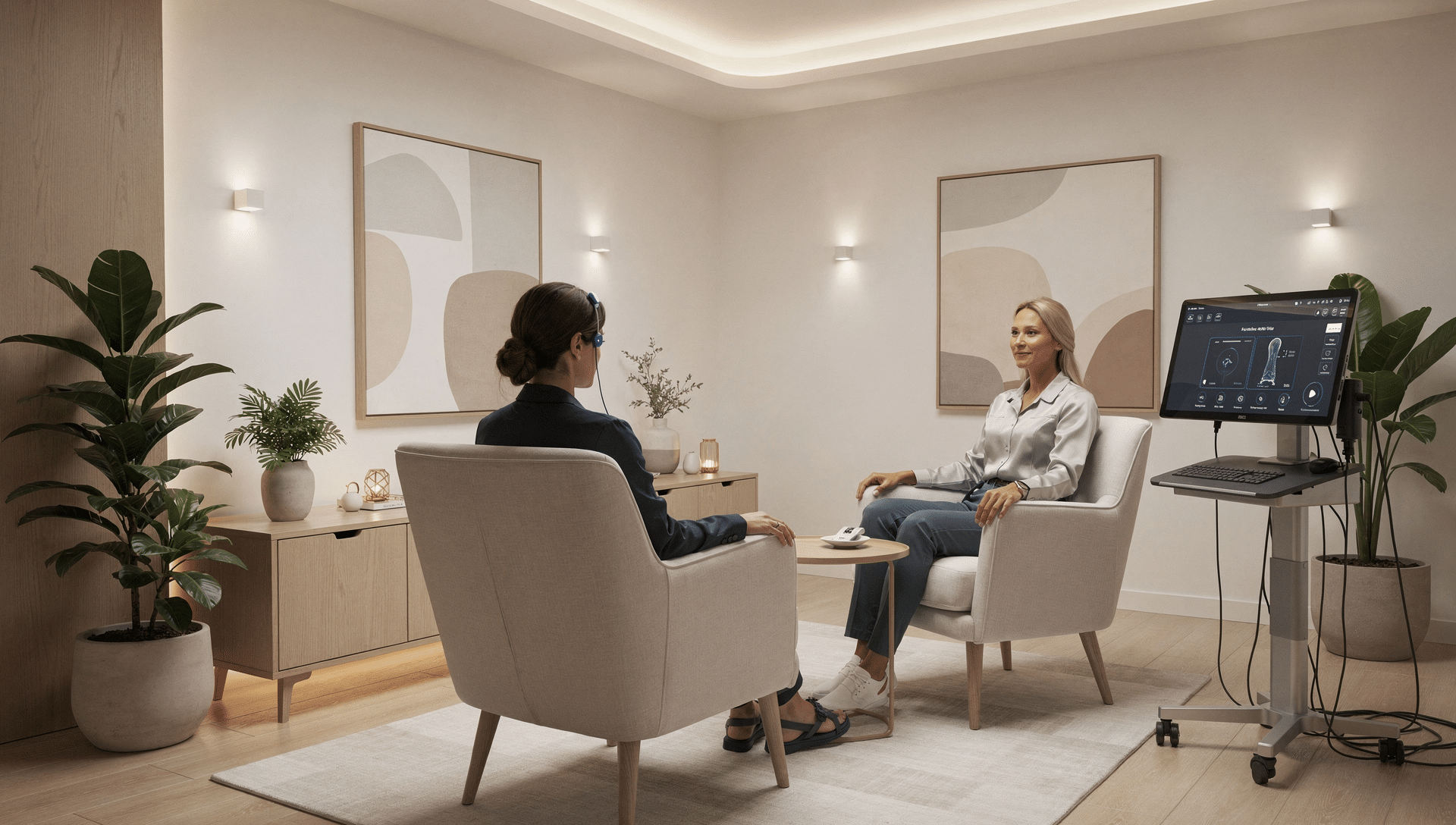
Train Your Brain. Change Your Life.
What Is Neurofeedback?
Neurofeedback uses real-time brain activity to gently guide your brain toward healthier patterns. It doesn’t force change. Instead, it gives your brain information so it can self-correct, just like biofeedback for the mind. Think of it as showing your brain a mirror—when it sees what it’s doing, it naturally learns to adjust and find better balance.
This approach is non-invasive, drug-free, and personalized to your unique brain. No two brains are alike, which is why neurofeedback training is always tailored to your specific patterns and goals.

How Does Brain Training Work?
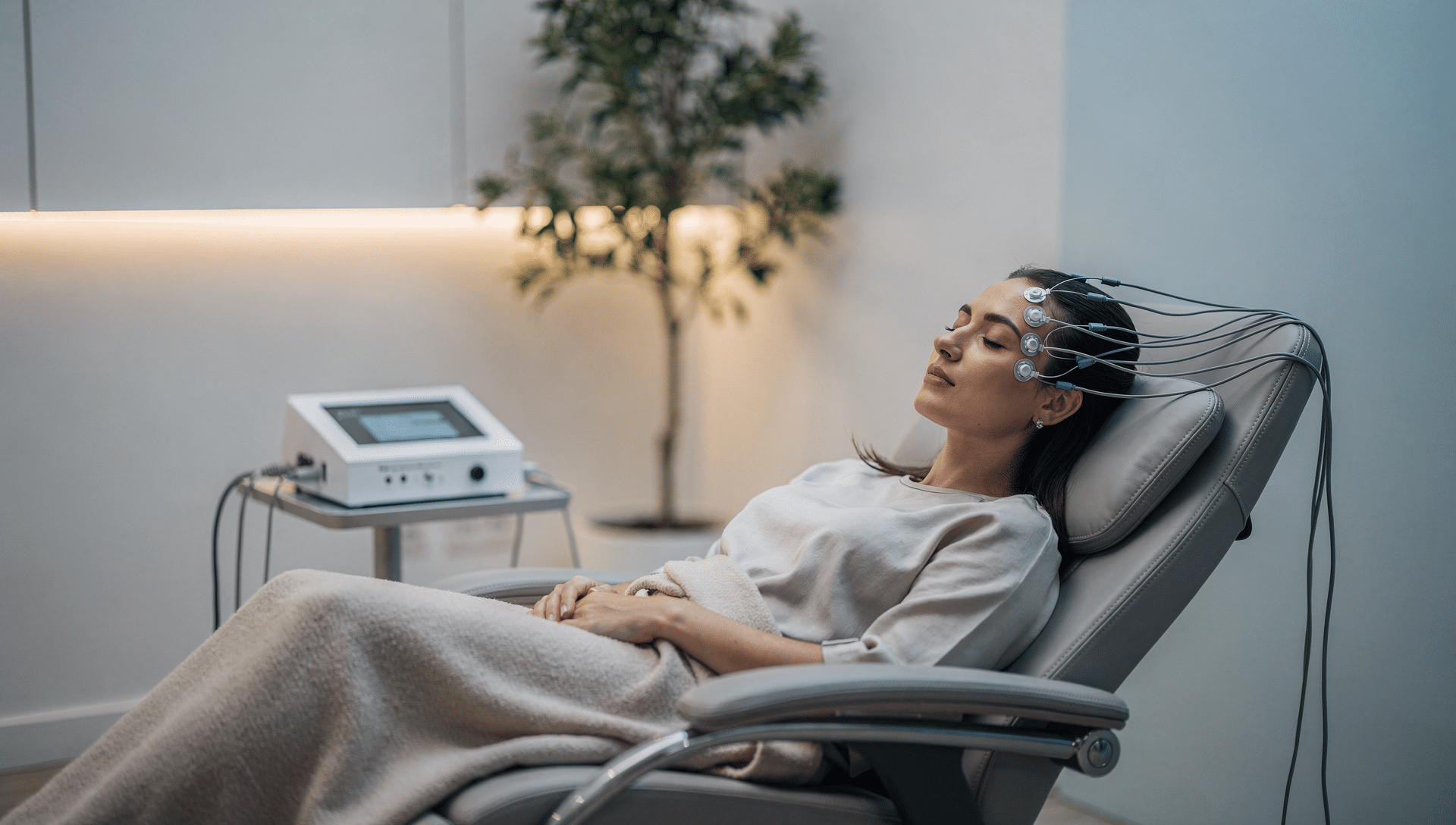
As you relax and watch visuals or listen to sound, your brain receives feedback in real time. When it moves toward healthier patterns, the feedback improves, the music plays smoothly, or the video becomes clearer. When patterns drift, the feedback shifts. Over time, your brain learns which patterns work best and begins to hold them naturally.
This learning process is how lasting change occurs. Your brain is incredibly adaptive, and neurofeedback simply helps it recognize and reinforce the patterns that support optimal function.
Sensors Read Activity
Non-invasive sensors measure your brainwave patterns in real time
Brain Receives Feedback
Visual or audio cues respond to your brain’s activity instantly
Learning Happens
Your brain recognizes healthier patterns and begins to hold them
Changes Become Natural
Over time, improved regulation becomes automatic and lasting
Your Brain Map Is the Starting Point
A brain map measures how different areas of your brain are functioning compared to age-based norms. It helps us identify patterns related to focus, stress, sleep, emotional regulation, and performance. The results show us exactly where your brain may be working too hard, not hard enough, or out of sync with itself.
Your program includes four brain maps over the course of training. These maps allow us to track progress, adjust protocols, and ensure your training stays aligned with your brain’s needs as it changes. We’re not guessing, we’re measuring, adapting, and optimizing your training every step of the way.
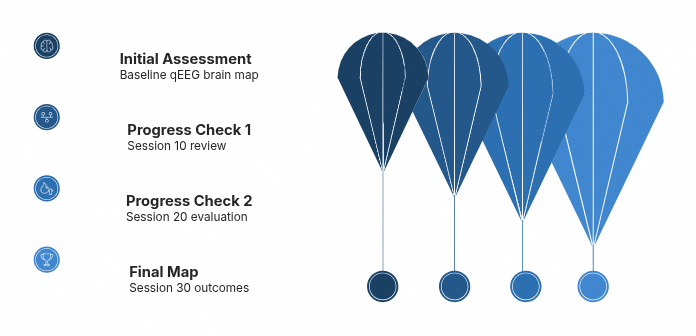
What Does a Full Brain Training Program Look Like?
Session Structure
Personalized Protocols
Building New Habits
Who Can Benefit From Neurofeedback?

Anxiety & Stress

Focus & Attention

Sleep Quality

Mood Support

Trauma Recovery

Cognitive Clarity

Headaches

Peak Performance
Backed by Decades of Research
Research has shown that neurofeedback can change measurable brainwave activity and support improvements in attention, emotional regulation, stress response, and sleep. Studies have examined its effects in populations ranging from children with attention challenges to adults seeking cognitive and emotional resilience, veterans with PTSD, and athletes pursuing peak performance.
Neurofeedback is used in clinical settings, performance environments, and research institutions worldwide. Major universities, hospitals, and wellness centers have integrated neurofeedback into their programs, recognizing its potential to support brain health in safe, non-invasive ways.
50+
Years of Research
Decades of scientific study and clinical application
3,000+
Published Studies
Peer-reviewed research papers on neurofeedback
We’re happy to share research summaries and references upon request.
Why Train the Brain Directly?
When the brain becomes more regulated, people often find it easier to sleep, focus, manage stress, and follow through on healthy habits. It’s not that neurofeedback does these things for you, it helps your brain do them for itself.
Neurofeedback works best as part of a whole-person approach that may include nutrition, movement, mindfulness, therapy, and supportive care. It’s a tool that complements other wellness practices by strengthening the foundation, your brain’s ability to regulate itself.
This is why so many people describe neurofeedback as transformative. When you train the brain directly, you’re not just managing problems, you’re building capacity for lasting change.
What Changes Do People Report?
Feeling Calmer
Better Sleep
Sharper Focus
Emotional Flexibility
More Resilience
Greater Well-Being
Your Next Step
There’s no pressure and no commitment required. Our goal is simply to provide you with the information you need to make an informed decision about your brain health. Many people find that seeing their own brain map is a powerful and enlightening experience.
Book a Consultation
Review Your Results
Begin Training
Our Commitment to Excellence
Professional Credentials
Advanced Technology
Years of Experience
Copyright © 2026 - Synergy Holistic Health Center. All rights reserved.
Internet Presence by Main Street Marketing